Homeowners struggle with the frustration of stains, dust, and odors settling into their furniture faster than expected. As a result, many turn to the web, looking for helpful ways to restore freshness and clean their upholstery. If you landed on this page looking for suggestions on how to keep upholstery clean, read on.
This blog covers practical insights on why upholstery gets dirty so quickly, natural DIY methods, step‑by‑step cleaning techniques, a weekly upholstery maintenance checklist, and instances highlighting when it’s time to hire a professional for deeper, fabric‑safe care.
Why Upholstery Gets Dirty So Fast
Sofas, chairs, and cushioned seats are placed in high‑traffic areas where family and guests spend the most time. Frequent use means food crumbs, body oils, and dust settle into the fabric faster, yet are not visible immediately. Pets also contribute to this mess, shedding fur, leaving dander, and tracking in dirt from outside, all of which stick to upholstery.
Additionally, simple daily habits like eating on the couch or resting with shoes cause stains and odors, making upholstered furniture one of the quickest household items to lose its clean, fresh look.
How to Keep Upholstery Clean: 4 Easy DIY Upholstery Cleaning Methods
To keep upholstery clean, you’ll need to have a proper cleaning plan. Random cleaning might damage upholstery. This section covers various natural upholstery cleaning methods that you can utilize.
But, before you slide into the details, below are some prepping tips to consider:
- Assess the manufacturer’s tag, and check the cleaning code (W, S, WX, or X). This helps you pick a fabric-safe cleaning method.
- Gather necessary supplies, i.e., brush, clean cloth, water bucket.
- Open windows and doors to improve ventilation, so the upholstery dries faster.
Once you’re ready, follow these DIY cleaning methods:
1. Vacuuming
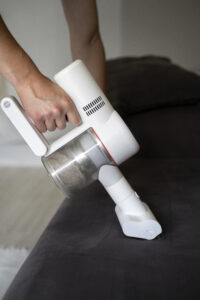
Upholstery collects dust, crumbs, and pet hair, especially in high‑traffic areas. Frequent vacuuming is the best way to maintain upholstery, as it minimizes the scope for dirt accumulation.
DIY actions:
- Attach the upholstery tool to your vacuum.
- Vacuum across cushions, seams, and under pillows.
- Use crevice tools for corners and edges.
Outcome: Loose dirt and allergens are cleared, stopping them from settling deeper and lowering the risk of stains.
2. Baking Soda Odor Treatment
Food and pet odor cling to upholstery more often than you realize, making the air harder to breathe, especially for family members with allergies. Natural deodorizers such as baking soda can help eliminate odor without damaging fabric.
DIY actions:
- Sprinkle a layer of baking soda across the fabric.
- Allow it to sit for 15–20 minutes to absorb odors.
- Vacuum afterwards with an upholstery attachment.
Outcome: Fabrics smell fresher, and persistent odors are neutralized, making this one of the easiest upholstery cleaning tips to follow.
3. Vinegar and Water Spot Cleaning
Coffee, juice, wine, pet accidents, or greasy food penetrate fabric fibers and might leave permanent stains. A water-vinegar solution breaks down residues and oils and neutralizes odors, making it a safe, natural DIY option.
DIY actions:
- Mix equal parts distilled vinegar and water in a spray bottle.
- Spray the solution lightly onto the area without soaking.
- Blot gently using a clean microfiber cloth until stains are lifted.
- Let the fabric air‑dry with proper ventilation.
Outcome: Prevent upholstery stains before they embed deep into the fabric.
4. Mild Soap Cleaning
Consider mild soap as an in-between option for cleaning when you want to avoid harsh chemicals, and still want a similar cleansing effect. A mild soap solution, if used in an appropriate amount, can clear everyday dirt.
DIY actions:
- Mix mild liquid soap with warm water.
- Dip a microfiber cloth into the solution and blot or wipe upholstery in small sections, focusing on areas that look dull or stained.
- Rinse the cloth in clean water, and wipe again to remove any soap film.
Outcome: Upholstery appears bright, and odors are minimized.
Weekly Upholstery Maintenance Checklist
Once you understand the natural DIY methods, executing weekly cleaning should be easy. A routine maintenance checklist simply involves basic upholstery cleaning tips. This keeps furniture fresh and prevents dirt buildup or stain set before they become a messy problem.
Here’s a closer look at some of the weekly upholstery cleaning tips that one can follow:
- Dust upholstery instead of vacuuming, as it’s safer for securing furniture fabric.
- Shift and fluff the cushion for even distribution and to prevent wear.
- Quick reaction to spills. Instantly blot fresh spills and prevent upholstery stains.
- Sprinkle baking soda on upholstery to eliminate any persistent odour.
- Check seams and threads, and identify any fading or worn areas of your sofas, chairs, and other furniture, and spot any issues early.
Common Upholstery Cleaning Mistakes to Avoid
The results of diy cleaning methods and weekly maintenance are nullified if you make cleaning errors. While these errors are often unintentional, it’s important to keep them in mind for attaining optimal results.
Cleaning mistakes to avoid:
- Ignoring the manufacturer’s fabric codes can lead to using the wrong cleaning method.
- Over‑wetting fabrics, as excessive water triggers issues such as shrinkage, discoloration, or mold growth.
- Harsh scrubbing, as constant rubbing of stains continuously pushes them deeper into fibers.
- Delaying spill response, waiting too long to clear fresh stains, as they can permanently set.
- Using strong chemicals, bleach, or untested detergent cleaners can weaken fabric and fade colors.
- Neglecting colorfastness tests, skipping a hidden‑spot test risks visible fabric damage.
- Vacuuming too often, constant heavy suction can wear down delicate upholstery fabric.
- Neglecting ventilation, as restricted airflow slows drying and traps odors.
When to Hire Professional Upholstery Cleaning
DIY upholstery cleaning methods work well, but as part of weekly maintenance, some situations will demand professional care. It’s crucial to know when to call a professional upholstery cleaner.
Instances and signs suggesting when you need professional upholstery cleaning:
- Odor lingering around furniture despite thorough self-cleaning.
- Stains reappear on the upholstery fabric even after spot-cleaning.
- Antique upholstery, or material such as wool, velvet, or silk, requires particular cleaning methods.
- Visible damage to the upholstery, damp-looking fabric, or signs of severe wear.
- Heavy upholstery, such as recliners or sectionals, requires thorough deep cleaning.
- Routine deep maintenance is needed for long-lasting upholstery. For routine upkeep, professionals recommend a thorough deep clean every 12 to 18 months.
Let a Professional Upholstery Cleaning Service Restore Your Furniture
DIY cleaning methods and maintenance tips are key prospects highlighting how to keep upholstery clean. Dusting, vacuuming, mild soap solutions, and baking soda can help with quick spills or light stains. But stubborn deep stains or fabric restoration will need expert hands.
At Atlantic Cleaning Co, our team of professionals is trained to deliver the best upholstery cleaning service. They use modern tools and techniques suited to your upholstery fabric, with the intent to restore its original appearance and freshness.
Call us now to book your deep cleaning session and uplift your house furniture.
Here are answers to the most common questions about upholstery care
1. Why is upholstery cleaning important?
Upholstery cleaning is important for preserving fabric quality, preventing permanent stains, eradicating odors, and eliminating allergens. A thorough cleaning extends furniture life, improves indoor air quality, and keeps living spaces healthier and more inviting.
2. How to clean sofa fabric?
Check the fabric tag, test a hidden spot for discoloration, and understand how to clean sofa stains accordingly. Use gentle methods such as dusting, blotting spills quickly, and applying safe DIY solutions in moderation to lift dirt, refresh fabric, and control long‑term damage.
3. How long for upholstery to dry after cleaning?
After cleaning, expect upholstery to dry within 4 to 24 hours. However, depending on fabric type, cleaning method, and room conditions, this duration may vary. For instance, a good airflow and ventilation can lower drying time.
4. How often should upholstery be cleaned?
Upholstery should be cleaned every 12 to 18 months. However, the exact frequency depends on in-house activities or issues such as spills, damage, or heavy usage.
5. What is the best way to maintain upholstery?
The best way to maintain upholstery is to vacuum weekly, blot spills immediately, use baking soda for odour control, rotate cushions regularly, and schedule a professional deep clean every 12 to 18 months.